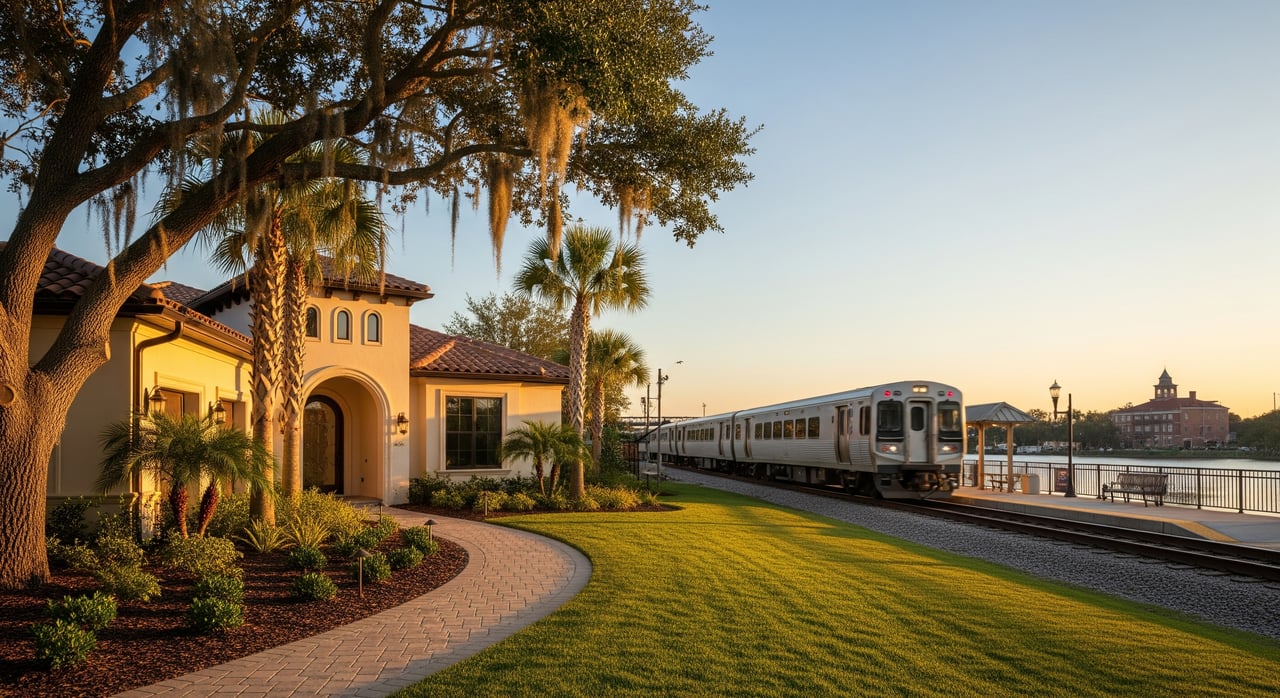
If you live in Sanford or you are thinking about buying or selling here, you have probably noticed how SunRail, the free downtown trolley, and Orlando Sanford International Airport influence day-to-day life. You want a home that fits your routine and holds value, and transit access can be a real advantage when it works for your schedule. In this guide, you will get a clear picture of how these assets shape commute patterns, buyer demand, pricing, absorption, and resale strength in Sanford. Let’s dive in.
Why transit matters in Sanford
SunRail’s Sanford station gives you a weekday commuter rail option that links Seminole, Volusia, and Orange counties. For many residents, that means a way to skip the most stressful parts of I‑4 during peak hours. Commuter rail systems like SunRail typically serve office cores and university districts and can anchor transit-oriented development with park-and-ride, bike facilities, and walkable amenities.
The free downtown trolley connects the station to the historic core and key local stops. This last-mile link makes the station practical even if you do not want to walk longer distances, and it pulls more homes and businesses into a realistic transit shed.
Orlando Sanford International Airport (SFB), just north of downtown, brings another layer of demand. Airports like SFB support jobs across airlines, ground handling, concessions, cargo, and logistics. They also generate visitor traffic that can impact rental demand where permitted.
How commuting patterns are shifting
Predictable peak commutes
SunRail gives you a consistent schedule that can be more predictable than highway driving during rush hour. If you work in the Orlando CBD, the UCF area, or regional office hubs, the rail option can turn a variable drive into a more reliable commute. For many households, that predictability is worth planning their housing search within the station and trolley catchment.
Park-and-ride and reverse commute
The station’s park-and-ride setup helps two types of riders. If you live slightly farther out, you can still drive to the station and take the train the rest of the way. It also supports reverse commutes, so workers heading into Sanford can arrive by rail and connect via the trolley or short walks to downtown offices.
First and last mile advantages
The free trolley extends the reach of the station by covering that last-mile gap. That means more homes are effectively “near transit.” For you, it widens the map of neighborhoods that can deliver a consistent door-to-door commute without needing to live immediately next to the rail platform.
Who is buying near transit
Buyer and renter segments
- Peak-hour commuters who want a non-driving option to major job centers.
- Professionals and families who value downtown restaurants, culture, and parks, plus quick rail access for work.
- Airport employees and contractors seeking shorter commutes to SFB, especially if shifts align with service.
- Investors targeting long-term rentals serving commuters and airport staff, or short-term rentals for SFB visitors where permitted by local rules.
- Out-of-area buyers seeking a walkable downtown lifestyle with strong transportation options.
These groups create a broader and more resilient buyer pool around the station area and trolley corridor, which can support faster absorption for the right properties.
Pricing, absorption, and resale trends
What research says about transit proximity
Studies of transit and housing show that homes near quality commuter rail often carry a price premium, especially within a 0.25 to 0.5 mile walk. Good first and last mile connections can expand the area that benefits. These locations also tend to see shorter time on market among buyers who value transit, which can help during slower cycles.
The size of any premium depends on service frequency, perceived safety and upkeep, and the surrounding neighborhood amenities. Well-integrated stations with reliable schedules usually perform better than locations with infrequent service or weak connections.
Sanford factors to watch
Sanford’s revitalized, walkable downtown enhances the value of being close to the SunRail station and trolley route. That combination can support price resilience and faster absorption for homes within easy walking distance or a quick trolley ride of downtown and the station.
SFB adds a separate demand stream from airport jobs and visitor activity. That can lift long-term rental demand and, where allowed, short-term rental interest. At the same time, immediate adjacency to the airport may bring aircraft noise and traffic considerations, which can moderate premiums for properties directly under flight paths or near industrial logistics.
Neighborhoods and micro-locations
Stronger subareas near the station
Blocks that are walkable to both the station and the downtown core often attract buyers who want transit access with restaurants and entertainment close by. Homes along the trolley corridor can capture similar benefits, especially when schedule alignment makes commuting seamless.
Airport-adjacent considerations
Neighborhoods between downtown and SFB may appeal to airport staff and logistics workers. Evaluate noise exposure, traffic patterns, and the feel of surrounding uses to ensure the property aligns with your lifestyle and long-term resale goals.
Due diligence for transit-adjacent homes
- Verify the actual walking time from the property to the station or nearest trolley stop, and look at sidewalk quality and street crossings.
- Review SunRail’s weekday schedule to confirm it matches your commute windows. Check trolley hours and weekend service if you plan to use it for errands or dining.
- Look into station parking policies and availability if you plan to use park-and-ride.
- Assess aircraft noise contours from SFB and understand any flight path overlays that may affect comfort and resale.
- Review local short-term rental regulations, permitting, taxes, and occupancy rules before underwriting any STR income.
- Check neighborhood safety statistics and any station-area maintenance or lighting improvements.
- Confirm zoning, future redevelopment plans, and any TOD incentives that could support long-term value.
Actionable guidance by goal
If you are a commuter buyer
- Target homes within a 0.25 to 0.5 mile walk of the SunRail station or directly served by the trolley.
- Focus on door-to-door time, not just distance. A steady 45-minute multi-modal trip can beat a variable 30–60 minute drive.
- Prioritize blocks with stable sidewalks, lighting, and easy trolley access to keep the everyday experience convenient.
If you are a seller near transit
- Highlight walkability, trolley access, and SunRail schedule alignment to major job centers in your marketing.
- Emphasize downtown amenities that buyers will use during the week and on weekends.
- Prep the home for quick absorption: pre-list inspections, clean curb appeal, and clear showing logistics for commuters.
If you are an investor
- Underwrite long-term rentals oriented to commuters and airport staff; confirm employer concentration and shift patterns.
- For short-term rentals, confirm legal permissibility and all licensing and tax requirements before modeling revenue.
- Favor properties that balance transit proximity with manageable noise exposure to protect exit value.
What to measure before you make a move
- Compare median sale prices and days on market for homes within 0.25, 0.5, and 1.0 mile of the station against similar homes farther out.
- Track rental vacancy and asking rents within those same buffers.
- Review multi-year trends to see how downtown investment, SunRail schedule changes, or SFB route shifts correlate with demand.
- Watch for station or trolley upgrades and airport service announcements that could change momentum.
Bottom line for Sanford buyers and sellers
SunRail, the free downtown trolley, and SFB shape real housing decisions in Sanford. Together, they expand your options for a reliable commute, draw a wider buyer pool near downtown and the station, and support absorption and resale when service quality and neighborhood amenities stay strong. The best results come from pairing transit access with practical due diligence on schedules, noise, and local regulations.
Ready to map your move around the station, trolley, or SFB employment core? Reach out to Sean Sells Florida for a data-driven plan that fits your timeline and goals.
FAQs
Does SunRail match a typical 9-to-5 schedule in Sanford?
- SunRail is designed for weekday peak commuting, which aligns with many 9-to-5 schedules. Always confirm current timetables and trolley hours to ensure a smooth door-to-door plan.
How close should I live to the Sanford SunRail station for value?
- Research suggests the strongest impact is often within a 0.25 to 0.5 mile walk, especially where first and last mile links like the trolley are reliable. The right block and walk quality matter.
Will proximity to SFB help a rental strategy?
- Airport jobs can support steady long-term rental demand. Visitor traffic may benefit short-term rentals where permitted. Verify local rules, licensing, and taxes before assuming STR income.
Are there downsides to being very close to the station or airport?
- Potential concerns include noise, traffic, and perception of safety. Many buyers still prefer these locations when the station is well maintained and the neighborhood is walkable and well lit.
How do I quantify a transit premium in Sanford?
- Compare recent median prices and days on market inside 0.25, 0.5, and 1.0 mile buffers versus similar homes farther out, and review trends over several years to control for market shifts.
